Showing posts with label University. Show all posts

14 September 2016

Meg Arnold on free speech and safe spaces

Meg Arnold

“Liberty not only means that the individual has both the opportunity and the burden of choice; it also means that he must bear the consequences of his actions and will receive praise or blame for them.” 
F. A. Hayek, The Constitution of Liberty, Responsibility and Freedom

What does it mean for speech to be free? I’m less interested in the legal specifications surrounding this question and more eager to discuss what this means for us in our daily interactions. As an anarchist, I don’t see a legitimate role for governments to play in limiting or privileging certain types of speech. However, that does not mean that individuals cannot or should not be held responsible for the things they say by others in their chosen communities. Since we’ve removed as an option the use of force to suppress speech, what avenues might remain available for praxis?

If speech is to exist in a kind of “marketplace of ideas,” then “praise” or “blame” can act as a profit and loss system for “good” and “bad” speech. It remains the domain of individuals to decide for themselves what constitutes good and bad, as well as how to react to different ideas. Some people are comfortable combating ideas with their own speech with the hope of, at least, persuading or emboldening others to do the same. For others (usually those who have experienced trauma related to particular ideas such as misogyny, rape culture, homo- and transphobia, etc.) the response is often to retreat from spaces where these ideas are shared uncritically and build alternative spaces with others who feel similarly. Some would call these “safe spaces,” but bell hooks has another idea; removed from fear of re-traumatization and retaliation, people create spaces in which they are “safe to struggle.” It is a gross mischaracterization of safe spaces to say that there aren’t any levels of disagreement among those involved. Rather, open and respectful disagreement is possible because there is a foundation of mutual trust established through the intentions set for the space.

Neither of these approaches to speech with which we disagree is objectively better or worse than the other, and it would be difficult to determine their relative effectiveness without considering the validity of individual preferences. The problem of safe spaces is not about censorship or exclusion but about property rights and free association. If people want to limit access to a space based on any criteria, this should not be a problem so long as they are doing so on their own property. This includes the ability for people with racist, misogynist, and other bigoted views to freely associate. By all means, be open about your prejudices so that I and others know who to avoid and condemn.

College campuses make the issue of safe spaces and other forms of free association difficult because of their often mixed status as public or public-private entities. Therefore, to focus on the encroachment of safe spaces on protected speech is a form of “hacking at the branches” rather than “striking the root” of the problem which is a lack of defined property rights on college campuses. Even the University of Chicago, which sent incoming students a letter regarding safe spaces and trigger warnings, recognizes the value to students of being able to access these spaces on campus. UChicago decided only that classes themselves are not acceptable locales to set safe space intentions because classrooms have different and conflicting sets of intentions associated with them. They have also left the decision to use trigger warnings or not up to individual professors and students, which respects the local knowledge professors have of their subject matter and students have of their traumas and life experiences.

Libertarians and other free speech advocates have primarily focused on the freedom of speech from government, college administrators, and a vocal minority of anti-speech activists. However, a thick, cultural approach is needed to also hold individuals responsible for the content of what they freely espouse. According to Hayek, a free society demands both freedom and responsibility. If we don’t hold people accountable for the things they say, then we are, at best, coddling them and, at worst, allowing the perpetuation of those ideas that we find personally abhorrent. Instead of mocking those who advocate for the use of trigger warnings and safe spaces and giving platforms to those who espouse bigotry in the name of free speech, why not take a look at the content of what each is saying or is too afraid to say?

Citations to this article:
Arnold, Meg, “Responsibility and freedom: A defense of safe spaces”, Augusta Free Press, Sept. 7, 2016


Meg Arnold - Center for a Stateless Society


Enter your email address:


Delivered by FeedBurner
Read More »

26 February 2016

Mosquito repellent to deter Zika virus?

The Blog


Students from a university in Mexico have taken it upon themselves to research and create a whole new type of mosquito repellent, in hopes of reversing the terrible toll of the Zika virus carried by mosquitos.


The Zika virus has been causing birth defects, with the virus' recent explosion in lethality and hospitalization spreading throughout Brazil and other parts of South America and arriving in Central America, including Mexico. As a result, officials have sought to improve access to birth control to suppress the scale of birth defects.

Citing information from the National Science and Technology Council in Mexico, human rights and environmental expert Deborah Dupre says the mosquito repellent stands out from traditional repellents because due to being 60% less expensive. Made from on plant-derived chemicals creating three different types of oil to repel insects, the new type of mosquito repellent is to be marketed under the brand name CitroRepel.

"Phenomenal" student-made mosquito repellent


Dupre referred to the mosquito repellent as "phenomenal" due to its low cost and  lack of harmful ingredients associated with older chemical products.

Article: Students Conquering Zika Emergency with Phenomenal Repellent


The clubof.info Blog

Read More »

17 February 2015

Defending #Commons from Firm and State

@KevinCarson1.


For policy elites in most nations, there are only two alternatives for the provision of public services: State ownership and management (the preferred model of Social Democrats and liberals/progressives) or corporate “privatization” (pushed by neoliberal heirs of Reagan and Thatcher). Commons governance (about which more later) isn’t even on the radar.


There’s little practical difference between state- and corporate-owned services, despite the theoretical difference in ownership. Both are governed by the same top-heavy managerial culture, the same bureaucratic “best practices” and the same high-overhead business model. Both serve the same interests, regardless of whether a particular service is nationalized or “privatized.” Nationalization amounts to “lemon socialism,” in which some input is of vital importance to the interests of capital as a whole but corporation interests either find it insufficiently profitable or have difficulty overcoming the prisoner’s dilemma problems of funding and coordinating it themselves. And “privatization” is just the opposite — lemon capitalism — in which the state’s performance of a function has outlived its usefulness for capital and corporate interests see the opportunity to extract a profit from it (but still with the state’s help, of course).

The two are frequently parts of the same life-cycle. Initially the state creates an infrastructure that’s necessary for capital’s realization of profit. For example, the majority of foreign aid and World Bank loans since WWII have gone to building the transportation and public utilities infrastructure needed to make Western capital’s overseas investments profitable. Quite often public debt is undertaken to fund such infrastructure as the result of collusion between multilateral institutions or corporations and unaccountable elements within the debtor government, without any taxpayer feedback.

Once undertaken the public debt, in turn, serves (much like company store debt in American mining towns) as a lever for enforcing desired behavior on the recipient. Ultimately, if servicing debt becomes too big a burden, it may be used to blackmail governments into adopting neoliberal austerity policies (e.g. the “structural adjustment” programs imposed on much of the developing world, the European Central Bank’s squeeze on Greece, or the corporate coup which put an “Emergency Manager” in charge of Detroit).

The cycle is complete when neoliberal elites use debt from creating the publicly funded infrastructure to blackmail governments into virtually giving away that same infrastructure to the corporate interests it was created to serve in the first place. Such “privatization” typically involves insider deals by which it is priced at a tiny fraction of the cost of creating it, or of what it would cost for those corporations to build it from scratch themselves. In fact governments often spend as much money upgrading the infrastructure to make it saleable as they realize from the sale. And the first order of business for the corporations that acquire these infrastructures at fire sale prices is usually asset-stripping and hollowing out. Finally, far from functioning in a “free market,” newly “privatized” services continue to exist in a web of state protections and de facto monopoly status.

It’s an overall process in which the state socializes operating costs and subsidizes inputs to make capital artificially profitable, and disaster capitalists seize on the resulting fiscal disaster to loot taxpayer-funded assets and subsequently gouge the public.


The principles are basically the same, with minor changes in details, in the kinds of “public-private partnerships” where a service or infrastructure remains state-owned and -funded, but some aspect of service delivery is outsourced to a for-profit corporation (the corporate model of “educational reform” the disaster capitalists imposed on New Orleans is an example). As Cory Doctorow (“Go digital by all means, but don’t bring the venture capitalists in to do it,” The Guardian, Feb. 6) points out in the case of museums, libraries and schools as “market-driven public institutions,”

it’s we, the public, who are the angel investors. We paid to keep the archives growing, to put a roof over the museum, to amass and catalogue all of our nation’s cultural treasures (and the treasures of many other nations). The internet now makes it possible for those institutions to reach wider audiences than ever before, at lower costs than ever before – once their collections are digitised. When Siemens or another big company comes along to digitise our investments, they are the VCs putting in late-stage capital after we’ve borne all the risks, sometimes for centuries.

Both variants of “privatization” are everywhere to be found. In countries like Iraq that are militarily defeated by the United States, or countries like Chile and Russia where US-backed dictators come to power, entire economies are auctioned off to global corporations. The same is true of debtor nations like Greece that international vulture capital has over a barrel, and cities like New Orleans and Detroit that experience one kind of disaster or another that renders them vulnerable.

Chicago mayor Rahm Emanuel, who was born without a sense of ethics, filled a vacancy on the school board with Deborah Quazzo, co-founder of GSV Advisors, a firm that raises venture capital for outsourcing public school functions (“teaching math, educating disabled students, even writing report cards”) to for-profit businesses. (The seat was previously held by billionaire Penny Pritzker when she was appointed to Obama’s commerce department — I’m not sure whether that says more about Emamuel’s Chicago or the Obama administration.)

GSV Advisors’ sister firm, GSV Capital, owns educational technology companies that sell teaching software and extracurricular materials to public schools. Since accepting her school board seat Quazzo has continued to invest in such firms. “In other words, a key decision-maker for Chicago’s public schools makes money when school boards decide to sell off the functions of public schools” (Rick Perlstein, “How to Sell Off a City,” In These Times, January 21).

Fortunately, we have alternatives beyond ownership of public services and resources by governments or corporations. Commons governance of common pool resources (like the lakes and aquifers that city water systems depend on) and social (not state) ownership of public services is one of them. Social or common ownership can be reflected in public utilities organized as stakeholder cooperatives, with the ratepayers themselves directly governing the use of resources and distribution of services.

Fortunately, too, the communities being stripped of their rightful ownership rights by states in collusion with capital aren’t taking it lying down. In Detroit, for instance, the Detroit Water Brigade (an organization former “Emergency Manager” Kevyn Orr denounced as a “tool of Occupy Wall Street,” and accused of putting manufactured victims on display as a gimmick to villify him and the corporate looters) is resisting the corporate parasites who’ve taken over the city water system and put the screws to the public. Detroit Water Brigade, among other things, stockpiles and distributes drinkable water to Detroit residents in danger of dehydration, and likewise distributes portable rainwater collection systems as an alternative for those whose water has been cut off. And it’s conducting a public awareness campaign to shine the light on the scavengers picking Detroit’s carcass clean.

More generally, there’s a movement to reclaim the commons as a public inheritance against both state and capital (“Ciudad furor: The public, the commons and the democratisation of the city,” Provisional University, Dec. 4, 2014):

  1. People are fighting privatization by refusing to recognise the state as the owner of public services and resources, instead claiming that they belong to the people.
  2. Where public services are gone, people are organising themselves, locally and democratically, to provide the services they need. This included the provision of healthcare in the Greek example and the provision of housing in the Spanish example, but there are millions of others.
  3. But there are also forms which kind of bring together both elements of the first two. These are struggles which both defend or demand the public provision of services while at the same time vesting ownership of services in the people and getting people involved in the democratic control of services.

The manufactured struggle between “government” and “business” conceals a real alliance. The claims of business interests to favor “free enterprise” are as fake as government claims to represent the “public interest.” It’s time for us to reject this false choice and instead turn to the real alternative of cooperating with each other in our common interest.
Read More »

10 February 2015

#Free #School Choice

@joelschlosberg.


Jonathan Kozol. Free Schools. (Boston: Houghton Mifflin Company, 1972).

Matt Hern. Field Day: Getting Society Out of School. (Vancouver: New Star Books, 2003).

During this year’s School Choice Week, this pair of books can bring some perspective exactly because they aren’t brought up by either side of the debate. Neither author writes in the tone of a policy-wonk report: one in white-hot anger, the other in an unpretentious conversational style.


So, what exactly are free schools? Despite a welcome trend of schools reviving the name in the new millennium — one of which has even gotten denounced by Glenn Beck(who seems to think it invented the term “learner-centered”) — the free schools of the 1960s and 1970s have fallen out of public consciousness. Never gaining the name recognition of Montessori, the co-option by the system of kindergarten, or the academic respectability of Rousseau’s Emile, they have been easy to ignore. Briefly, they were schools outside of the public and traditional authoritarian private systems, not only in the technical sense but in being deeply opposed to their aims, and “free” not in the sense of no cost but of student autonomy and social liberation.

Kozol’s book, written right before the original flurry of free schools peaked, makes it clear right off the bat that free schools are unlike public alternatives which,
cannot, for reasons of immediate operation, finance and survival, raise serious doubts about the indoctrinational and custodial function of the public education apparatus. No matter how sophisticated or how inventive these “alternatives within the system” may contrive to be, they nonetheless must continue to provide, within a single package: custodial functions, indoctrinational functions, credentializing, labeling and grading services, along with more purely educational functions such as skill-training. [Public alternatives] constantly run skirmishes on the edges of the functions and priorities of domestication; in the long run, however, they cannot undermine them. The school that flies the flag is, in the long run, no matter what the handsome community leader in the startling Afro likes to say, accountable to that flag and to the power and to the values which it represents.
Indeed, Kozol has been so identified for decades with his subsequently calcified role as the go-to guy for explaining that “The Market is Not The Answer” (in the name of oneinterview) that it’s startling to realize how vehemently he denounced the public schools. On a single page, he refers to the public school as “that old, hated, but still-standing and still-murderous construction,” “the miserable and monolithic enemy,” and“that old haunted house that flies the U.S. flag.”

This is despite him having more respect for public alternatives working with underprivileged kids, despite their futile attempts to make ultimate change within the system, than for free schools that were accessible only to well-off students and evasive of the time’s social issues. (Add to this a disdain for the counterculture matching any conservative hippie puncher.) Kozol soon came to regret the hotheadedness of the controversial passage, with its casual reference to “a place of physical isolation in the mountains of Vermont” — exactly where some readers were running schools for poor kids — and a comparison to “a sandbox for the children of the SS Guards at Auschwitz.” But his tough love did get many free schools to successfully address issues of economic and racial privilege.

The bulk of the book deals with the nuts and bolts of running a free school with a hardened assessment of the obstructionism the corporatist system is capable of and a by-any-means-necessary attitude towards strategy. There is a candid discussion of getting money from the large-scale philanthropy that Kozol is under no illusions about being tied into the very system the free schools hope to undermine. One of these means, in fact, is a form of vouchers, leading Marcus A. Winters to note that “So open to new ideas was he at that time that … he even hinted at a solution not much different from the one advocated by choice supporters today.” It’s “different” in the sense that current school choice isn’t initiated by Black Power parents suing the pants off of school districts for criminal negligence of their kids.

And between philanthropy and vouchers, there’s the most interesting proposal: small-scale businesses aimed at local needs of the free schools’ neighborhoods. These would be very deliberately aimed at earning a profit, allowing a source of income to put into running the schools to ease their reliance on philanthropy (with its strings and tendency to dry up) and tuition (with its pressure to raise above the level affordable to poor kids). He bluntly tells those who find such business (including franchising from chains like McDonald’s) unidealistic to get over it. This is very much in parallel to the suggestions for local businesses as a source for neighborhood economic self-sustenance inNeighborhood Power; there’s a forgotten intellectual current of the time that deserves to be revived.

Three decades later, Hern’s book overtly refers to, quotes, and builds on Kozol’s, especially the concern about schools becoming only an option for the privileged (although Hern is more charitable to see this tendency as inadvertent). But far from being the typical liberal Kozol fan, Hern makes quick work of Kozol’s reformist assumptions:
One could read a book like Savage Inequalities and interpret the stories as a call to government to correct these inequities and, with massive resource infusions, ensure equal institutional opportunity. But when you’re in a hole you should stop digging. Schools and the state are inextricably linked and schools are both reflecting and reinforcing a vision of society. As institutions they reinforce the social disparities around them. 
And Hern’s critique of establishment reformism goes beneath the strategy to dissect the underlying assumptions: the Procrustean social control implicit in the very idea of uniform curriculum, the social necessity of warehousing kids. Yet Hern makes his radicalism much harder to dismiss by putting it in the down-to-earth style of Paul Goodman and his muse Colin Ward. Whereas Kozol open his book with line-in-the-sand confrontationalism, Hern asks the reader to just relax and give him a chance if they’re a family member of an unschooler.

(And yes, there is the whole irony that Hern hails from Canada, a country whose nationalization is identified by both admirers and detractors with “socialization.” But Hern has a native decentralist tradition to draw on, from social credit to anarchist history doyen George Woodcock. Hern points out compulsory schooling was only established nationwide during World War II. In fact, it’s surprising that in discussing Canadian public alternatives that allow for substantial student power — sometimes out of desperation to keep funds attached to kids that can homeschool — there’s no mention of the SEED school whose students included an obscure science fiction writer and blogger by the name of Cory Doctorow.)

After an introduction briskly establishing a firm opposition to not only school, but reforms led by either corporations or government, “The Politics of Deschooling” sketches the rise of compulsory schooling (with its roots in the unabashed authoritarianism of Plato, Napoleon, and Fichte ignored) and the anarchist resistance exemplified by William Godwin, Leo Tolstoy and Francisco Ferrer. In a time when anarchism is virtually institutionalized as an extracurricular hobby, it brings home the unique insight of the real tradition. Compulsory schooling is excoriated for its inevitable paternalism and inequality.

In all this, Hern is not afraid to point out the monetary stakes involved, where the scale of subsidy is something there’s a vast vested interest in preserving. Even though the vast majority of funds go to administration, “Asking teachers’ unions about schooling is like asking Enron about energy policy.” Hern is skeptical towards charters and vouchers (unless the system is already decentralized to a far greater extent) because there is a huge pressure for them to simply get on the gravy train. Privatization schemes “alwaysinclude state and elite direction.” Adding them within the existing framework can easily be a worst-of-both-worlds which “off-loads the responsibility, leaves control in corporate hands, allows for profit-making on the back of social services and refuses to democratize any core power.” As Mary Leue forthrightly puts it: her “Free School never would have been accepted for charter funding. Never.”

In short, “School people are concerned that charter schooling and voucher systems are undermining the essential supports of compulsory schooling, while deschoolers are concerned — and convinced — that they won’t.”

In the middle chapters, “Free to Learn” critiques the assumptions of compulsory school control as “natural” and asks what what free activity is like (with equality between children and adults being merely a special case of how, paraphrasing Gloria Steinem, “equality means treating people differently”). “A Schooled Culture” takes the culture wars to task for arguing over the contents of the canon while not questioning its very existence. (Hern respects conservatives’ honesty about their aims with creating a canon and their appreciation for kids’ ability to pick up facts. In looking at their lists of stuff to learn by rote, “all the information on it seems like useful stuff for people to know… Hell, I would like it if I knew all that was on those lists, even the third-grader ones.”) In conclusion, “The End of Compulsory Schooling” looks not to any one magic bullet, but the gradual crackup of the system from the pressure of a multitude of alternatives, looking at which existing alternative schools and homeschooling networks could form the model. In between the very conversational chapters are actual conversations with people ranging from public alternative reformers to free-schooling anarchists.

Libertarians can learn much from Kozol and Hern: the necessity of grappling with power inequalities, the importance of community, the limitations of a vulgar consumerism that treats everything in the world as a product, and the crucial importance of specific real, living examples. They can also learn about the dangers of capture of attempts to create markets by the existing state apparatus, despite ironically developing a theory of regulatory capture that understands it.

But on the other hand, left-libertarians can answer Hern’s concerns.


The only one of Hern’s conversation partners to come from a free-market perspective is John Taylor Gatto, who talks past Hern’s qualms that lead him to assert that going “from the nightmare of compulsorized state schooling into the arms of free-market liberty is not to move very far.” But if, “In a society that it deeply inequitable, a free-market system is not really free at all,” it’s not really market either. Hern’s challenge that “Alternatives to school should view themselves as being at the heart of communities, as reflecting and creating the neighbourhoods around them, as permeable, democratic counterinstitutions explicitly about developing local power.” is a letter-perfect description of what all of Karl Hess’s alternatives aimed at when he was coauthoring Neighborhood Power. Or as Michael Strong put it:

When forced to use a label, I would describe myself as a “left-communitarian-libertarian.” My ideal goals for the world – peace, prosperity, happiness, and sustainability for all – are very much the goals of the left. I believe that many of the pathologies that we see in modern society (and I do think that contemporary society is mostly pathological) can only be cured by means of deeper communal attachments. And I think that membership in communities can only be voluntary, not forced (thus the libertarian streak). Forced, geographical “communities,” from zoned public schools to nation-states, are not communities at all. Coercion poisons everything that is beautiful about community.

And American individualists, from Josiah Warren to the single tax colonists to the individualist anarchists and single taxers involved in building Ferrer schools in the United States, have always been community builders extraordinaire.

The era of free schools was also one of forgotten left-libertarian alliances, from Joel Spring working with the libertarian movement (even if he later regretted it due to its later plutocratic takeover), to Ivan Illich being the featured contributor to a new left-oriented magazine by the Cato institute (earning the admiration of John Holt, who also tried to argue them into protectionism), and the Murray Bookchin — whose social ecology formed the basis for many of Hern’s ideas — chilling with Karl Hess at the Libertarian Party convention.

Finally, when Hern understands that “Mass compulsory schooling is always to the detriment of local knowledge, because it relies on a universalizing logic” it should be emphasized that no structure is better attuned to such “local knowledge” than undistorted markets.

With the last decade’s hardening of centrist orthodoxy (Waiting for “Superman” etc.) and center-left retrenchment around public schools, the crumbling of the system Kozol predicted and Hern hoped for hasn’t happened quite yet. (Kozol noting a decade later that “The language of bravado and rebellion that prevails throughout the book appears a bit out of alignment with the stark political realities of the 1980s” has got to be the understatement of the Reagan era.)

The wave of dissident teachers of which Kozol was a part — and who had come to fame by rejecting the system that betrayed them — are either remembered as reformers (like Herbert Kohl, none too happy about Obama’s education czar Arne Duncan’s co-option of his book 36 Children) or simply forgotten (like James Herndon, who had scathing volumes about his experiences in both poor and affluent schools). Eventually Kozol gave up on being charitable to those who had his own former anti-system view (stating he’d“atoned” for it). George McGovern went from carrying around John Holt’s writing on the campaign trail to supporting No Child Left Behind.

But “something has survived” from the original wave of free schools — not just individual schools hanging on in hard times, but a mindset ahead of its time that could break through the stale debates on school choice.
Read More »

6 February 2015

#Meritocracy Aids Blindness, #Oligarchy

@CathyReisenwitz.


If America has any characteristic that does not so much define it as it is, but defines it as it aspires to be, it’s offering upward mobility. Class struggle which gets anyone anywhere could be understood as meritocracy against a permanent oligarchy. Beginning with the rise of the merchant class and ending with the rise of the first true middle class, the globe has undoubtedly shifted against nobility and towards meritocracy. However, replacing a rigid caste system with oversimplified notions of hard work, culture, and bootstraps have veiled the shifts which have not just arrested, but reversed, the expansion of the middle class.

Essentially, there’s a new oligarchy in town. The landed gentry got their asses kicked by the captains of industry. But a new “can of whoop ass” has been opened by the financially literate on the ignorant and struggling.


It’s Been Real, Middle Class


Wealth, throughout history, was never about income from labor. It has, until pretty recently (14th century, give or take) been about income from land. The first challenge to agricultural economic hegemony came from a plucky little upstart called international trade. Goods crossing borders enabled people to build wealth from labor alone for the first time. It created the merchant class.

Then came the Industrial Revolution, which expanded both the number of people who could build wealth from labor, and the scope of the wealth they could build. It gave black-lunged, coal-covered birth to the first real middle class in human history, and completely remade the makeup of the 1%.

This middle class grew and grew, with increased standards of living and a deliciously tumultuous upper crust. Fortunes were won and lost by each generation.

Then, in the 1970’s, the gap between rich and poor in America began to take off. As incomes steadied in the middle, so did the shakeups in who constitutes the richest of the rich. Three-quarters of America’s one-percenters will still be one-percenters next year.

Every year in America, fewer and fewer people can move into a higher class than their parents. Today, there are many other wealthy countries where it’s easier to move up in class.

From the Economist, “America’s meritocracy is… in danger of calcifying into a caste, decorated with a few members from favoured minorities, but cut off from the great mass of the population. The social hierarchy is getting both steeper and harder to climb.”

Oh Hai, New Oligarchy


In 1979, just under 8% of the 1% were rich from finance-related occupations. In 2005, the percentage had grown to 13.9%. Within the 0.1%, the percentage grew from 11% to 18%. And in that time, the top earners went from getting their wealth from wages and bonuses to financial instruments. Interest, dividends, capital gains and rent make up a quarter of income for the average one percenter. These households control nearly half of all stocks and mutual funds and more than 60% of securities.

Here’s Wikipedia: “As of 2002, there were approximately 146,000 (0.1%) households with incomes exceeding $1,500,000, while the top 0.01% or 11,000 households had incomes exceeding $5,500,000. The 400 highest tax payers in the nation had gross annual household incomes exceeding $87,000,000. Household incomes for this group have risen more dramatically than for any other. As a result, the gap between those who make less than one and half million dollars annually (99.9% of households) and those who make more (0.1%) has been steadily increasing, prompting The New York Times to proclaim that the ‘Richest Are Leaving Even the Rich Far Behind.’”

The Myth that Won’t Die


I’m in Liberty Tavern, eating a tres fancy brunch. There’s caviar on the buffet in the fifth highest income county in the country, in a city least likely to fuck around with the meal that combines breakfast and lunch. One of my two friends says something arresting about herself.

“I make rich people uncomfortable.” She doesn’t mean she’s a threat to the income inequality, though that could be somewhat true, as she does sometimes write about economic justice. What she means is she’s loud and, (not her word) uncouth. Rich people don’t know what to do with her. I want to argue with her and crawl under the table at the same time. Instead, narcissist that I am, I think about how I make rich people feel.

Class is fascinating to me. My parents are both second-generation members of the middle class. Both my grandfathers fought in Vietnam, having escaped poverty via the expansion of officers in the Air Force. I grew up in Alabama, where my mother read me Shakespeare and we had burglar bars on our windows and trailers on 3 sides of our rented house.

Conservative poors confound liberals. They are extremely likely to believe America is a meritocracy, where the wealthy and high-status individuals are that way because they earned it by providing value. You can see it in their opposition to affirmative action and anti-poverty programs and their refusal to accept impediments such as structural racism as material contributors economic inequality.

The assumption that America is a meritocracy means, by extension, that people who are poor are poor because they’ve not put forth enough, or the right kind of, effort. From Bill O’Reilly blaming black fatherlessness for poverty, and not say, decades of housing discrimination, redlining, failing public schools. Or recognizing mass incarceration’s role, particularly for non-violent offenses, in fatherlessness.

The right calls this a culture of accountability. The left calls this victim blaming.


Liberals don’t understand why poor people believe they’re poor in a system which rewards merit. But I get it. For me, aspiring to a lot meant I wanted to graduate from college by 22 and get and keep a full-time job which supported me. It wasn’t until I’d done all that that I realized what low aspirations those were for me. Let’s just say that applying to an Ivy League school literally didn’t occur to me. But once I had a degree and a good job at 22, I realized that if I worked hard, I could be rich. And I assumed I would. And if I could do it, anyone could.

There may be no more effective way to throw someone off the search for a victimizer than to blame victims for their own oppression.

I didn’t realize that no one gets rich from wages.


A Bloomberg National Poll found that more than three-quarters of Americans felt no effect on their financial well-being from the five-year bull market in U.S. stocks. That’s probably because only half of Americans own stocks, and most of those are in retirement accounts.

Confession: I am still not exactly sure what a stock is. Getting rich in America requires two things the poor don’t have: financial literacy and surplus wages. I don’t want to say that poor Americans believe in a meritocracy because they are ignorant of how the rich get rich. But it certainly helps to believe in a meritocracy when you don’t understand how the rich get rich.

Owning land isn’t hard. It doesn’t help anyone else, in and of itself. Building a ship is hard. Sailing to another continent without satellite navigation is hard. Building a factory is hard. These are all activities, and they help the doer by helping other people.

Perhaps in theory thriving financial markets produce wealth across the board. But not ours. A thriving market requires risk and reward be private. America’s financial markets only privatize reward. And the rewards are flowing. The rich are getting richer. And the poor? They’re paying for the failures of the rich. To look at just one recent example, we can examine the sub-prime mortgage lending crisis. Middle class wage stagnation itself belies trickle-down economics. Stagnant wages and rising individual household debt make saving enough to invest impossible. Americans are paying more in taxes to fund golden parachutes for banking executives than they’re saving for stocks and bonds.

Overcoming the obstacles to upward mobility requires acknowledging them. Meritocracy blinds people to the structural barriers to their own success. We’ve built a new oligarchy with financial instruments the average American can’t afford and doesn’t understand.


Enter your email address:


Delivered by FeedBurner
Read More »

5 December 2014

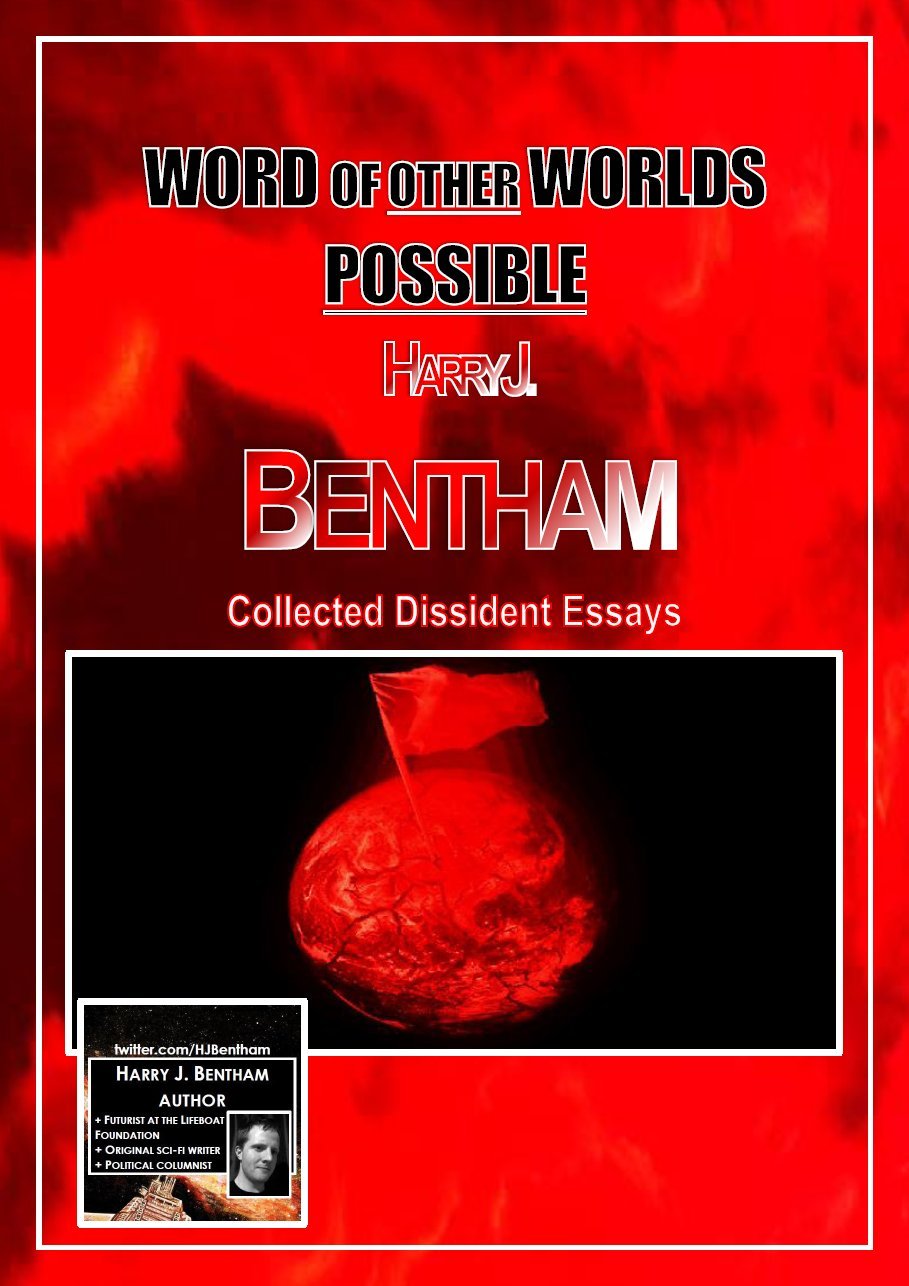
Word of Other Worlds Possible

. #book. #@hjbentham. #politics. #progress. #technology. #change.


Book Recommendation: Harry J. Bentham, Word of Other Worlds Possible


From Amazon:

Penned at the radical newsletter Dissident Voice from March 2013 to May 2014, these are the collected dissident essays of the British activist and political analyst Harry J. Bentham.

Bentham's insightful political analyses have made headlines and shockwaves of opinion across the world from his column at Press TV, but he has been widely published elsewhere. With the growing crisis of the world system, the relevance of his radical anti-statist and anti-capitalist ideas can only grow greater. Another world is possible. As a bold political futurist armed with the fire of modern sociology, Bentham has a compelling and awesome view of how that world will emerge.


To feature your book via all four of our newsletters, or to find more information about our promotional services, view our moderately priced options available at Maquis Books.

Enter your email address:


Delivered by FeedBurner
Read More »

3 October 2014

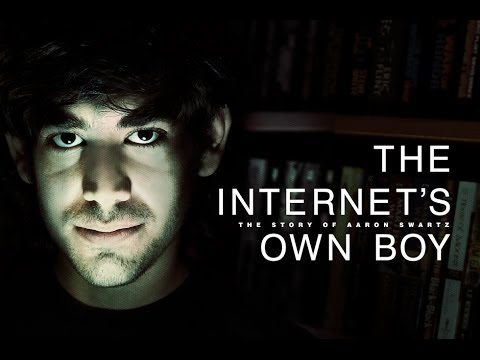
Aaron Swartz and his fight for open

. @OpenSourceWay. @TheInternetsOwnBoy. #creativecommons. #AaronSwartz.


A new documentary about the life of Aaron Swartz was released in June this year. It recounts the story of one of the most impactful young talents of the Internet age, and the tragic saga of his quest to make the world a better place.

Directed by Brian Knappenberger, the film was funded through Kickstarter and backed by 1,531 supporters who collectively pledged $93,741, surpassing the initial funding goal of $75,000.

Fittingly, it opens with this quote from Henry David Thoreau:
Unjust laws exist;
Shall we be content to obey them,
or shall we endeavor to amend them,
and obey them until we have succeeded,
or shall we transgress them at once?
The film then follows the life of Aaron Swartz through the prism of his family, friends, and colleagues. Starting from an early age, when his father introduced him to the Apple II computer when he was three years old, and when his mother discovered he had taught himself how to read. Through his formative years and achievements, finally to his death on January 11, 2013.
"He was a prodigy, although he never thought of himself as such."
 —Lawrence Lessig.

Notable events in Aaron's life


When Aaron was twelve, he created a website called TheInfo.org, a knowledge-sharing site, open for anyone to edit; it was essentially an early precursor of the Wikipedia. This site won a school competition held by ArsDigita. Then, not yet a teenager, Aaron got involved in the development of RSS. In the film, Cory Doctorow tells the story of how after participating in the design discussions of RSS for a year, Aaron was invited to attend an in-person meeting. But, he declined, saying: "I don’t think my mom will not let me, I just turned fourteen."

Unhindered by his age, Aaron worked shoulder to shoulder with luminaries of the Internet.
I first met him over IRC.
He didn’t just write code,
he also got people excited about solving problems,
he was a connector.
 The free culture movement has a lot of his energy.
I think Aaron was trying to make the world work;
he was trying to fix it.
—Tim Berners-Lee
Then, by exploring the history of education, that knowledge became a vehicle for Aaron's coming of age. He was quite interested in copyright and how it obstructed the free sharing of knowledge in the digital age.
I started reading books about the history of education,
and how this education system was developed, [...]
and this led me down this path of questioning things,
and once I questioned the school,
I questioned the society that built the school,
I questioned the business that the school was training people for,
I questioned the government that set up this whole structure.
—Aaron Swartz
At 15 years old, he flew from Chicago to Washington, to attended the Supreme Court hearing on the challenge that Lawrence Lessig brought on behalf of Eldred against the Copyright Extension act of 1998 (also known as the Mickey Mouse Protection Act). When the challenge failed in the Supreme Court, and Lessig conceived of Creative Commons as the next line of defense for the open sharing of knowledge and information, Aaron became enthusiastically engaged and began designing the computer representation of the CC licenses to ensure that they were machine readable to enable automation as well as easily understandable by humans, to facilitate sharing. This led to the CC license chooser that we enjoy today. 

Aaron's work and life began to become a balancing act between social engagement and information sharing. He created the accountability project, Watchdog.net, and the Open Library project, a site with a wiki page for every written book.
I feel very strongly,
that is not enough to live in the world as it is.
Take what you are given and follow the things that adults told you to do,
and your parents told you to do,
and society told you to do.
 I think you should always be questioning,
I take this very scientific attitude that everything you learn is just provisional.
It is always open to recantation, or refutation, or questioning.
And I think the same applies to society
.
…
once I could see that there were fundamental problems
that I could do something to address,
I didn’t see a way to forget that,
I didn’t see a way not to.
—Aaron Swartz
This commitment led Aaron to collaborate with Stephen Shultze, a former fellow at the Berkman Center for Internet in Society at Harvard, and Carl Malamud, a Public Domain advocate, on taking action to raise awareness about the obstructions that the PACER site put on the open dissemination of U.S. court records. These are documents that are not only in the Public Domain but that constitute the corpus of legal precedents in the United States. During a conference, Aaron worked with others on improving code initially developed by Shultze and downloaded 2.7 million records from the PACER site. This attracted the attention of the FBI, who did not pursue legal action because the documents belonged in the Public Domain.

Aaron was instrumental in facilitating the grassroots movement that led to stopping the SOPA and PIPA bills in U.S. Congress, saving the Internet from crippling restrictions intended to protect the interests of publishers at the cost of breaking the architecture of the web. His passion for the open sharing of knowledge led him to the Open Access movement, specifically the large amount of scientific articles that are kept behind paywalls by publishers despite the fact that the large majority of the work done to procure findings is paid for with public funds. Note: The authors transfer copyright for free to the publishers, and the reviewers work for free as volunteers.

Then Aaron's legal troubles began in earnest. On January 6, 2011, Aaron was arrested by Massachusetts Institute of Technology (MIT) police on state charges of breaking-and-entering, after he systematically downloaded academic journal articles from JSTOR. Federal prosecutors later charged him with two counts of wire fraud and 11 violations of the Computer Fraud and Abuse Act, carrying a cumulative maximum penalty of $1 million in fines, 35 years in prison, asset forfeiture, restitution, and supervised release.

The charges were considered by many to be out of proportion, especially considering that JSTOR decided not to press charges. Then, after defending himself for over two years, Aaron committed suicide on January 11, 2013.

One of his last commits in GitHub was on the victorykit project, a free and open source platform to run campaigns for social change. And, on August 3, 2013, Aaron was posthumously inducted into the Internet Hall of Fame.

The documentary is free and available to watch on YouTube. Lasting 1 hour and 45 minutes, the film does a masterful job of following the events of Aaron Swartz's life and their context. His is a story that must be known, and must be told, by all of us who live in the digital age.


Enter your email address:


Delivered by FeedBurner
Read More »

30 May 2014

Making the most of your #laptop… case

An excellent laptop case is essential if you take good care of your hardware on the move. Netbooks have their own selection of cases too. The following are the best choices determined by ClubOfINFO, if you are in need of a case.

Cases can actually be used for more than just keeping dust off your laptop. According to one personal security expert, they even help privacy. Correctly sealed, they will neutralize the ability of hackers and government spies to listen in on your personal conversations via your machine when it isn’t in use.

Best laptop case


A laptop sleeve is just as effective as a laptop case (minus that you can’t keep your lead and other equipment in it), and many are carefully engineered impact foam to absorb shock if the machine is dropped. Our recommendation of this kind is the Case Logic sleeve for 15 inch screens.

If a full case is what you are searching for, you will need to be prepared to pay more, but it will have the added bonus of being able to store your lead, a tablet and more. In fact, many of these are indistinguishable from the briefcases that many people use to carry their workload. For this, we recommend the Case Logic 17 inch laptop and tablet case.

Of course, we recognize that these cases only work for you if you have one of the bigger laptops that are increasingly popular now. Many, like me, instead prefer to rely on netbooks because they are such small and convenient partners to have.

Best netbook case


A sleeve is the most convenient and reliable way of keeping hold of a netbook. Netbooks are so small that, once in a sleeve, they can be put away in almost any briefcase and not burden the user much. The Kensington reversible sleeve is very good quality and has been reduced recently to a very low price, which makes it by far the most logical choice.

One suggestion would be to combine this with a Samsonite briefcase or similar, which would allow for easily moving documents and a netbook. University students making their way to lectures are particularly fond of this kind of combination.

Just put your email address here to get more ClubOfINFO articles delivered for free:


Delivered by FeedBurner
Read More »

Featured

“Blue Wave” or Not, Expect Business as Usual After the Midterms

“What I want you to do,” US president told a South Carolina rally audience in August, ” is pretend, please, that I’m on the ballot” when it’...

Follow Me on Twitter